Description
Mushroom Chocolate Bars: Psilocybin, Effects, Risks, Flavours & Legal Considerations
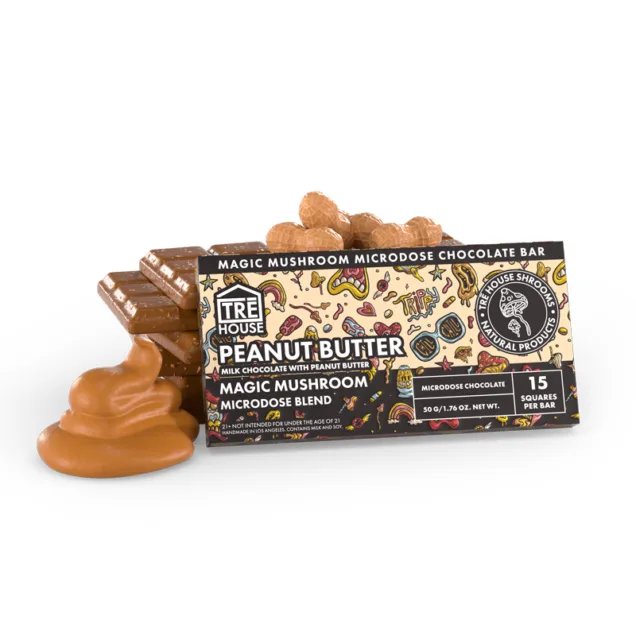
Mushroom chocolate bars have become a widely discussed category within the broader conversation around psychedelic mushrooms. Combining chocolate with mushroom-derived ingredients can make these products visually distinctive and easier to package than dried mushrooms, but the term “mushroom chocolate bar” can describe very different products.
Some products marketed as mushroom chocolates contain functional, non-psychedelic mushrooms such as lion’s mane or reishi. Others are marketed as containing psilocybin or psilocin, the psychoactive compounds associated with so-called magic mushrooms. There are also products using names such as shroom chocolate bars, magic mushroom chocolate, One Up chocolate bars, mushroom chocolate candy, and psychedelic mushroom bars.
Because product names and labels are not always reliable indicators of their contents, consumers should not assume that a chocolate bar contains a particular mushroom species, concentration, or active ingredient simply because the packaging makes that claim.
What Are Mushroom Chocolate Bars?
Mushroom chocolate bars are chocolate products marketed with mushroom-related ingredients. Depending on the product, the mushroom component may be non-psychoactive or may contain a psychedelic substance such as psilocybin.
Chocolate provides a familiar food format, while the mushroom component is incorporated into the product in various forms. This has contributed to the popularity of mushroom-themed chocolates in online discussions and alternative wellness communities.
However, a chocolate bar containing a mushroom-derived ingredient should not automatically be considered a conventional food or dietary supplement.
When a product contains psilocybin, the relevant legal and health considerations are substantially different from those associated with ordinary confectionery.
Psilocybin Mushroom Chocolate
Psilocybin is a naturally occurring psychedelic compound found in certain mushroom species. After ingestion, the body converts psilocybin into psilocin, which contributes to its psychoactive effects.
According to the U.S. National Institute on Drug Abuse (NIDA), psilocybin is classified as a hallucinogen and can alter perception, mood, and the way a person experiences their surroundings. Reported short-term effects can include hallucinations, altered perception of time, nausea, vomiting, anxiety, panic, and difficulty distinguishing fantasy from reality.
This means that a product marketed as a psychedelic mushroom chocolate bar should not be treated in the same way as an ordinary chocolate snack.
Why Is Chocolate Used With Mushrooms?
Chocolate has several practical characteristics that make it a popular format for products containing powdered or extracted ingredients.
It can provide a familiar flavour profile, mask earthy tastes, and allow ingredients to be distributed throughout a bar. Chocolate can also be divided into individual pieces, which makes the product visually easier to portion.
However, the presence of separate squares or segments does not guarantee that each piece contains an accurately measured amount of an active substance.
Unless a product has been manufactured and independently tested under appropriate standards, the stated amount on packaging may not provide the level of certainty consumers expect from regulated medicines.
Mushroom Chocolate Effects
The effects associated with psychedelic mushroom chocolates depend on what the product actually contains.
If a chocolate bar contains psilocybin, its effects can include changes in sensory perception, visual experiences, altered time perception, changes in emotions, and changes in thought patterns.
The experience can vary considerably between individuals. NIDA describes psilocybin experiences as potentially unpredictable, with some people experiencing distressing anxiety, panic, or frightening thoughts.
UK FRANK similarly reports that magic mushrooms can produce effects ranging from excitement and altered perception to confusion, paranoia, anxiety, nausea, and feeling overwhelmed.
This variability is one reason why claims that a particular mushroom chocolate will reliably produce a specific experience should be treated cautiously.
Why Product Strength Can Be Difficult to Verify
One of the major issues surrounding unregulated mushroom chocolate products is uncertainty about their contents.
Two products with similar packaging can potentially contain completely different ingredients. A label may refer to mushroom weight, mushroom extract, an advertised “mg” quantity, or an amount of a particular compound. Those measurements are not necessarily interchangeable.
In addition, the amount of active compound in mushroom material can vary.
Consequently, a statement such as “3,000 mg mushroom chocolate” does not necessarily mean that the product contains 3,000 mg of pure psilocybin.
Consumers should therefore distinguish between:
- Total chocolate weight
- Mushroom material weight
- Mushroom extract weight
- Claimed active-compound content
- Independently verified laboratory results
These are fundamentally different measurements.
One Up Chocolate Bars and Similar Products
Names such as One Up chocolate bars are frequently used in online searches relating to psychedelic mushroom chocolates.
The difficulty is that branding alone cannot establish what is actually contained in a particular product. Products with similar names may be sold in different jurisdictions, by different sellers, or with different formulations.
For that reason, consumers should avoid assuming that online descriptions accurately represent the chemical composition of a product.
Independent laboratory testing, transparent ingredient information, appropriate manufacturing controls, and legally compliant labelling are considerably more meaningful than branding alone.
Mushroom Chocolate Flavours
Mushroom chocolate products are often marketed using familiar confectionery flavours.
Common descriptions may include:
Milk Chocolate Crunch
A milk-chocolate format combined with crunchy ingredients can provide a conventional confectionery-style presentation.
Dark Chocolate Sea Salt
Dark chocolate and sea salt are frequently paired in premium chocolate products because the bitterness of dark chocolate contrasts with the saltiness of the formulation.
Cookies & Cream
Cookies and cream is another familiar chocolate flavour profile often associated with novelty confectionery.
However, flavour descriptions do not tell consumers whether a product contains psilocybin, another mushroom ingredient, or no psychoactive substance at all.
Golden Teacher Mushrooms and Chocolate
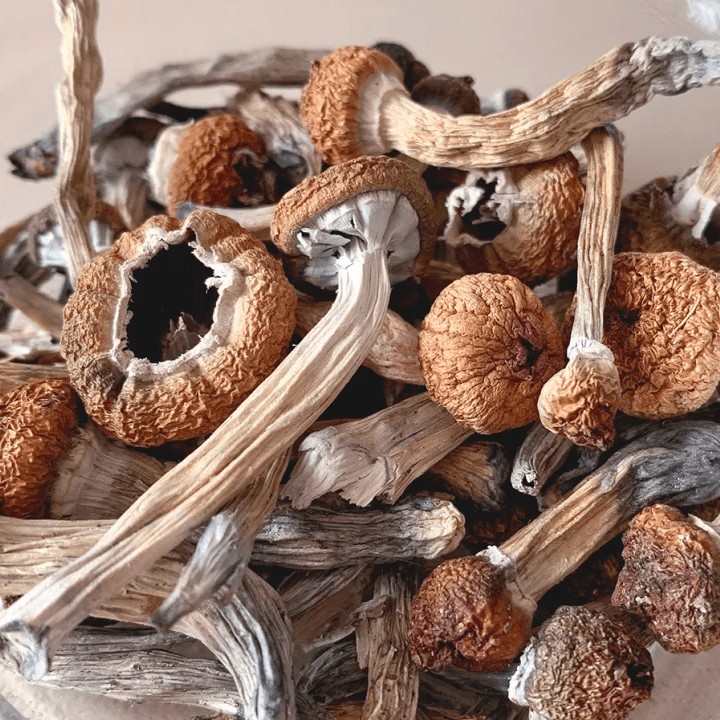
Golden Teacher is a commonly used name associated with a variety of Psilocybe cubensis. Products marketed using this name are frequently discussed in psychedelic-mushroom communities.
It is important to distinguish the name of a mushroom variety from the concentration of psilocybin or psilocin in a finished chocolate product.
The mushroom name alone does not establish the amount of active compound present in a chocolate bar. Similarly, descriptions of a particular mushroom as producing a predictable or universally positive experience should be approached cautiously.
Are Mushroom Chocolate Bars Legal?
The legal status of mushroom chocolate products varies significantly between countries and can depend on the ingredients.
A chocolate bar containing ordinary culinary or functional mushrooms may be treated very differently from one containing psilocybin.
In the UK, FRANK states that magic mushrooms containing psilocybin or psilocin are Class A drugs, and possession, supply, and sale are illegal.
This makes search terms such as “psychedelic mushroom bars UK” particularly important to interpret in their legal context. A product being advertised online does not establish that its possession, importation, sale, or supply is lawful.
Laws in other countries and U.S. states can differ, so anyone researching mushroom chocolate products should check current legislation applicable to their location rather than relying on an online seller’s description.
Mushroom Chocolate Bars in Texas
Texas has its own laws governing controlled substances, and the legal position surrounding products containing psilocybin should not be confused with the legal status of ordinary mushroom supplements or culinary mushrooms.
Searches for terms such as mushroom chocolate bars Texas may return products marketed online, but availability through a website does not establish legal compliance.
Consumers should verify the applicable law and the actual ingredients before making assumptions about legality.
Mushroom Chocolate Bars in Virginia
The same principle applies to Virginia.
A product described online as a “magic mushroom chocolate bar” may contain ingredients that are legally treated very differently from ordinary food products.
The safest approach is to identify the actual active ingredient, verify the applicable law, and avoid relying solely on branding or marketing terminology.
Health Risks Associated With Psilocybin
Psilocybin can produce significant changes in perception and psychological state.
NIDA reports possible short-term effects including hallucinations, altered perception of time, panic, nausea, vomiting, drowsiness, weakness, and difficulty distinguishing reality from fantasy.
FRANK also highlights anxiety, paranoia, confusion, nausea, vomiting, dizziness, and overwhelming experiences among potential effects of magic mushrooms.
The experience can be influenced by the individual’s circumstances, expectations, environment, and the substance involved.
Because unregulated chocolate products may have uncertain composition, there is an additional issue: the consumer may not know whether the advertised ingredient or concentration accurately reflects what is present.
Why Unregulated Mushroom Chocolates Require Extra Caution
A regulated food or medicine normally operates within defined manufacturing, labelling, quality-control, and testing requirements.
Unregulated psychedelic chocolate products may not provide the same safeguards.
Potential concerns include:
- Uncertain ingredient composition
- Incorrect potency claims
- Inconsistent distribution of active ingredients
- Contamination
- Undisclosed ingredients
- Misleading packaging
- Incorrect identification of mushroom species
- Products containing substances other than those advertised
These concerns are particularly relevant when a product is purchased through an unknown online source.
Mushroom Chocolate Candy Versus Functional Mushroom Chocolate
Not every mushroom chocolate is psychedelic.
Some products marketed as mushroom chocolate contain ingredients such as lion’s mane, reishi, cordyceps, or other non-psychoactive mushrooms. These products belong to a very different category from chocolates containing psilocybin.
Consumers should therefore read the complete ingredient list rather than assuming that the term “mushroom” means “magic mushroom.”
A product marketed as a functional mushroom chocolate may be intended as an ordinary food or supplement, while a product containing psilocybin raises controlled-substance considerations.
Psychedelic Mushroom Bars and Online Marketing
Search engines contain many commercial phrases relating to mushroom chocolates, including:
shroom chocolate bars, mushroom chocolate bars, psychedelic mushroom bars, magic mushroom chocolate, psilocybin chocolate, mushroom chocolate candy, One Up chocolate bars, shroomies chocolate bars, mushroom chocolate UK, and mushroom chocolate Texas.
These search terms describe consumer interest, but they should not be interpreted as evidence that any particular product is authentic, safe, legal, or appropriately labelled.
Online descriptions can also change quickly, particularly in markets where regulations are evolving.
What Should Consumers Look For?
Anyone researching a mushroom chocolate product should begin with the ingredient label rather than the product name.
Useful information includes:
- Full ingredient list
- Manufacturer identity
- Country of manufacture
- Batch or lot information
- Independent laboratory testing where applicable
- Clear allergen information
- Manufacturing information
- Appropriate warnings
- Legal status in the relevant jurisdiction
If a product makes unusually strong claims but provides little information about its ingredients or manufacturer, those claims deserve additional scrutiny.
Mushroom Chocolate Bars: Food, Supplement or Controlled Substance?
The category matters.
A conventional chocolate bar is primarily a confectionery product.
A functional mushroom chocolate may contain non-psychoactive mushroom ingredients and be marketed as a food or supplement, depending on its formulation and jurisdiction.
A chocolate containing psilocybin is different because psilocybin is a psychoactive controlled substance in many jurisdictions.
This distinction is particularly important for websites creating SEO content around terms such as “buy shroom chocolate bars online.”
Search intent does not change the legal or health characteristics of the product.
Frequently Asked Questions
What are mushroom chocolate bars?
Mushroom chocolate bars are chocolate products containing mushroom-related ingredients. Some contain ordinary culinary or functional mushrooms, while others are marketed as containing psychedelic mushrooms or psilocybin.
Do mushroom chocolate bars contain psilocybin?
Some products are marketed as containing psilocybin, but the product name alone does not establish what is actually present. Consumers should review the complete ingredient information and relevant laboratory documentation where available.
What are the effects of psilocybin?
Psilocybin can alter perception, mood, sensory experiences, and the perception of time. Possible adverse effects include anxiety, panic, nausea, vomiting, confusion, and hallucinations.
Are psychedelic mushroom chocolate bars legal in the UK?
UK FRANK states that magic mushrooms containing psilocybin or psilocin are Class A drugs and that possession, supply, and sale are illegal.
Are One Up chocolate bars safe?
The name or branding of a chocolate bar cannot establish its contents or safety. Products should be evaluated based on verified ingredients, manufacturing standards, testing, and applicable law.
Are all mushroom chocolates psychedelic?
No. Some mushroom chocolates contain non-psychoactive mushrooms such as lion’s mane or reishi. The ingredient list should be checked carefully.
Can mushroom chocolate products have unpredictable effects?
Products containing psilocybin can produce variable experiences, and unregulated products introduce additional uncertainty about composition and potency. NIDA notes that psychedelic experiences can be unpredictable and may include distressing psychological effects.
Further Information
For reliable information about psilocybin and hallucinogens, readers can consult the National Institute on Drug Abuse (NIDA) for research-based information about effects and risks. NIDA – Psilocybin and Hallucinogens Information
For UK-focused information about magic mushrooms, effects, risks, and the legal position, FRANK provides a government-supported drug information resource. FRANK – Magic Mushrooms Information
Final Thoughts on Mushroom Chocolate B
Mushroom chocolate bars sit at the intersection of confectionery, functional mushroom products, and the broader psychedelic discussion. Their chocolate format can make them look similar to ordinary sweets, but the ingredients can vary dramatically between products.
For anyone researching mushroom chocolate bars, shroom chocolate, psychedelic mushroom bars, One Up chocolate bars, mushroom chocolate candy, or psilocybin chocolate, the most important distinction is whether the product contains a psychoactive controlled substance or simply a non-psychoactive mushroom ingredient.
Where psilocybin is involved, the potential effects, product uncertainty, health risks, and local legal requirements need to be considered separately from the appeal of the chocolate format.
Reliable information about ingredients and legal status is more useful than relying on promotional claims, product names, or online availability.


Reviews
There are no reviews yet.